
By Goodings Grove Psychology Associates | February 2, 2026
Anxiety is more than just an emotional state. While it’s commonly associated with stress or worry, it can also have a profound impact on physical health. Many people don’t realize that anxiety can manifest itself through various physical symptoms, affecting everything from sleep patterns to digestion. If you’re feeling physically unwell, anxiety could be playing a role.
At Goodings Grove Psychology Associates, we’ve seen firsthand how anxiety can affect a person’s overall health. In this blog, we’ll explore how anxiety may be impacting your physical well-being, the common physical symptoms linked to anxiety, and how therapy services can help. Let’s dive into the connection between mind and body and discuss how psychological assessment testing can provide valuable insights into your health.
The Mind-Body Connection: Understanding Anxiety’s Physical Impact
When we think of anxiety, we often focus on its emotional toll. However, anxiety can have significant effects on the body, leading to physical symptoms that sometimes go unnoticed. Chronic anxiety can trigger a “fight or flight” response in the body, causing changes in heart rate, blood pressure, and muscle tension. Over time, these physical responses can lead to health problems.
Here’s how anxiety can manifest physically:
- Increased Heart Rate: Anxiety often causes the heart to beat faster, which can lead to palpitations or a feeling of the heart racing. This is due to the body’s natural “fight or flight” response. If these episodes occur frequently, they can contribute to cardiovascular strain.
- Digestive Issues: Anxiety can interfere with your digestive system, leading to stomachaches, nausea, diarrhea, or constipation. The gut and brain are closely connected, and anxiety can disrupt normal digestion, causing discomfort and other issues.
- Muscle Tension and Pain: Muscle tightness is a common physical symptom of anxiety. Chronic tension can lead to headaches, back pain, and neck stiffness. In severe cases, it can even contribute to conditions like temporomandibular joint (TMJ) disorders.
- Sleep Disruptions: Anxiety can make it difficult to fall asleep or stay asleep. Worrying thoughts can keep you awake, leading to insomnia and fatigue. Over time, lack of sleep can weaken your immune system and contribute to other physical health issues.
These physical symptoms can sometimes be mistaken for other medical conditions, leading individuals to overlook the fact that anxiety might be the root cause. If you suspect you’re dealing with such a condition, you should undergo therapy services in Homer Glen to improve your health.
How Anxiety Impacts Long-Term Health
While short-term anxiety may cause temporary physical symptoms, chronic anxiety can contribute to more severe and long-lasting health problems. If left unaddressed, anxiety can lead to:
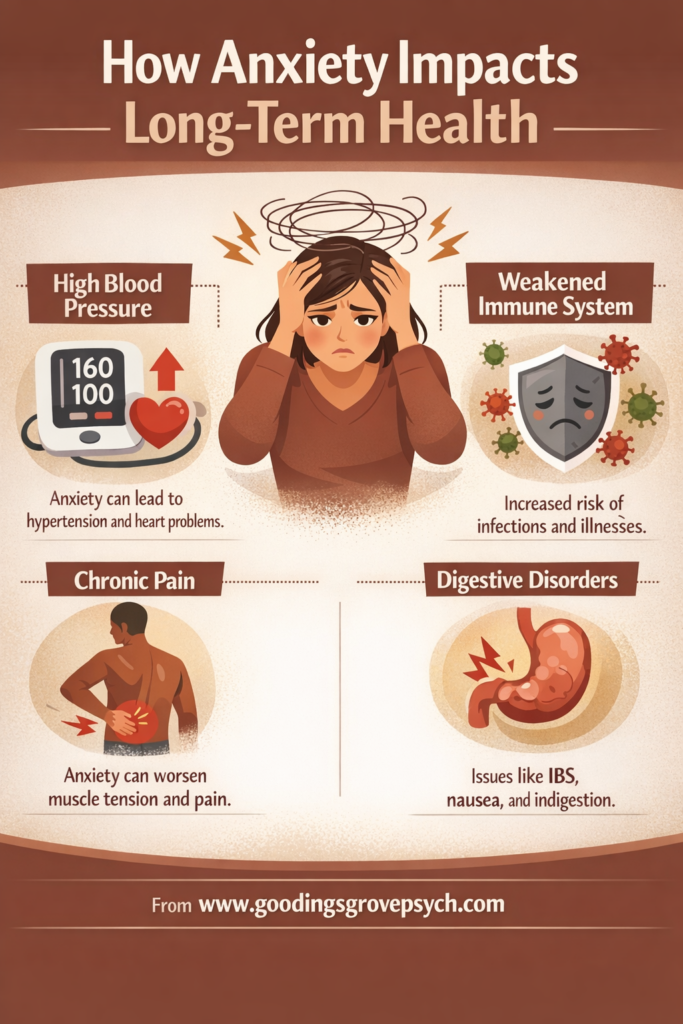
- High Blood Pressure: Chronic anxiety can lead to consistently high blood pressure, which increases the risk of heart disease and stroke. It can also worsen existing heart conditions.
- Weakened Immune System: Anxiety can suppress the immune system, making you more susceptible to illness. This means that people with anxiety may experience frequent colds, infections, and other health issues.
- Chronic Pain: Anxiety-related muscle tension can lead to chronic pain conditions, including tension headaches and back pain. Over time, this discomfort can interfere with daily activities and reduce quality of life.
- Digestive Disorders: Long-term anxiety can contribute to gastrointestinal issues such as irritable bowel syndrome (IBS) and acid reflux, both of which can significantly impact your physical health and comfort.
In addition to these physical concerns, anxiety can also exacerbate mental health issues, leading to a vicious cycle that impacts both the body and the mind.
Psychological Assessment Testing: Identifying the Root Cause
If you suspect that anxiety is affecting your physical health, psychological assessment testing can be an invaluable tool for identifying the underlying causes. At Goodings Grove Psychology Associates, we offer comprehensive psychological assessments to evaluate your anxiety levels and determine if anxiety is contributing to your physical symptoms.
Through these assessments, we can:
- Measure the Severity of Anxiety: Psychological testing helps determine the intensity of your anxiety, whether it’s situational or generalized. This allows us to create a tailored treatment plan to address both the emotional and physical aspects of your anxiety.
- Identify Other Contributing Factors: In some cases, physical symptoms may be linked to other mental health conditions, such as depression or trauma. A thorough psychological evaluation can help pinpoint the root cause and ensure that you receive the appropriate care.
- Track Progress Over Time: Psychological assessments can be used throughout your treatment to track improvements and ensure that therapy is having the desired effect on both your mental and physical health.
If anxiety is impacting your physical health, seeking a professional evaluation is an important first step in addressing the issue.
How Therapy Services in Homer Glen Can Help
At Goodings Grove Psychology Associates, we offer a variety of therapy services to help individuals manage anxiety and its physical effects. Our approach is designed to address the root causes of anxiety, offering both short-term relief and long-term solutions.
Here’s how therapy can help:
1. Cognitive Behavioral Therapy (CBT)
CBT is one of the most effective treatments for anxiety. It helps individuals identify and change negative thought patterns that contribute to anxiety. By addressing the mental aspects of anxiety, CBT can reduce its physical symptoms and improve overall well-being.
2. Mindfulness and Relaxation Techniques
Learning mindfulness and relaxation exercises can help calm the body and mind, reducing the physical symptoms of anxiety. Techniques such as deep breathing, progressive muscle relaxation, and guided imagery can help lower heart rate, ease muscle tension, and reduce stress.
3. Exposure Therapy
Exposure therapy involves gradually confronting feared situations in a controlled and supportive environment. Over time, this can help reduce the physical and emotional response to anxiety-provoking situations.
4. Medication Management
In some cases, therapy services may be combined with medication to help manage anxiety symptoms. We work closely with patients to ensure they have the right treatment plan that fits their needs, including recommending medication when appropriate.
The Importance of Early Intervention
If you’re experiencing physical symptoms related to anxiety, it’s essential to address the issue sooner rather than later. Early intervention can help prevent long-term health complications and improve your quality of life. By seeking help through therapy services in Homer Glen, you can begin to manage your anxiety more effectively and minimize its impact on your physical health.
At Goodings Grove Psychology Associates, we’re here to support you in your journey toward better mental and physical well-being. Our team of professionals is dedicated to helping you understand and manage your anxiety so you can live a healthier, more fulfilling life.
Anxiety doesn’t just affect the mind; it can have a significant impact on your physical health as well. Whether it’s causing muscle tension, digestive issues, or sleep disruptions, the physical symptoms of anxiety can be overwhelming. If you’re experiencing these symptoms, therapy services in Homer Glen, along with psychological assessment testing, can help you understand the root cause of your anxiety and provide the tools to manage it effectively.
At Goodings Grove Psychology Associates, we’re committed to helping you improve both your mental and physical health. If you’ve noticed that anxiety is affecting your body, don’t wait to seek help. Reach out to us today to schedule an appointment and take the first step toward feeling better.
People Also Ask
How does anxiety affect the body physically?
Anxiety can cause a range of physical symptoms, including increased heart rate, muscle tension, digestive issues, and sleep disturbances. Chronic anxiety can lead to long-term health problems like high blood pressure and a weakened immune system.
Can therapy help with physical symptoms of anxiety?
Yes, therapy can help address the physical symptoms of anxiety by teaching relaxation techniques, challenging negative thought patterns, and providing strategies to reduce stress and anxiety levels.
What are the early signs of anxiety?
Common early signs of anxiety include excessive worry, restlessness, difficulty concentrating, irritability, and physical symptoms like increased heart rate, muscle tension, and digestive issues.
Is anxiety a serious mental health condition?
Yes, anxiety can be a serious condition if left untreated. Chronic anxiety can lead to physical health issues, interfere with daily activities, and affect your overall quality of life. Seeking professional help is important for managing anxiety.
How can I reduce the physical effects of anxiety?
Practicing relaxation techniques, staying physically active, getting enough sleep, and seeking professional help through therapy can reduce the physical effects of anxiety. Cognitive behavioral therapy (CBT) is especially effective in addressing both mental and physical symptoms of anxiety.